Living with kidney disease
Vitaflo has developed this website for children who have kidney disease and their families to provide basic information on the dietary management of kidney disease. The information displayed on this website is for general information only and must not be used as a substitute for professional medical advice or treatment.
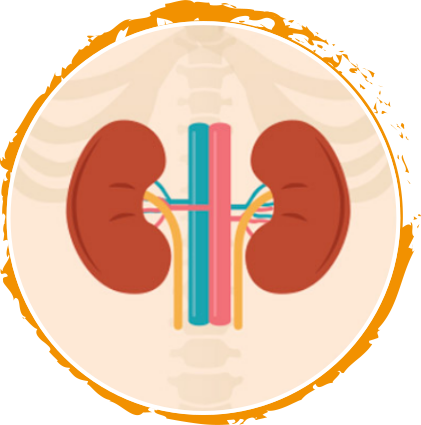
Filtering Fact:
Most people have 2 kidneys however some people are born with only 1 kidney.
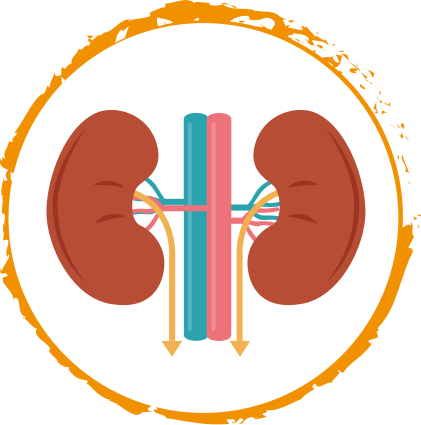
Filtering Fact:
Healthy kidneys filter about 180 litres of blood every day.
What is kidney disease?
If the kidneys aren't working as well as they should, this can lead to kidney disease. There are two types;
Acute Kidney Injury (AKI) is a sudden decrease in kidney function. This can happen, for example, if an individual has become severely dehydrated after vomiting and diarrhea, a blood infection, a blockage in or around the kidneys, or due to an accident. Some children may need medical treatment, a change in their diet, and monitoring in a hospital. Usually AKI resolves after a short time - a few days or weeks.
Chronic Kidney Disease (CKD) can begin as a minor decline in kidney function that can then progress to more severe kidney function problems. There are five different stages of kidney disease (stage 1-5). The final stage (stage 5) is kidney failure which is also known as end stage kidney disease (ESKD). This is when dialysis or a kidney transplant may be necessary. However, not all individuals progress through all the stages of CKD. There are many reasons why individuals develop CKD; some people are born with kidney problems and others develop kidney problems later in childhood.
Filtering Fact:
Dialysis uses special equipment or a machine to help do the job of the kidneys. Dialysis helps to filter unwanted products and excess water out of the body.
What are the symptoms of chronic kidney disease?
All the amazing jobs that the kidneys do can be affected by kidney disease. In the early stages of CKD, there are generally no symptoms. In the later stages of CKD, the symptoms can include:
How is chronic kidney disease managed?
CKD is managed by a healthcare team at the hospital. This means there are lots of experts looking after an individual, including a doctor, nurse and dietitian. How CKD is managed will depend on the stage of CKD and the symptoms present. Some people may feel very ill and need to take special medication. Sometimes a special diet will need to be followed. A dietitian specialising in paediatric kidney nutrition management will advise on what foods and drinks are suitable. Dialysis or a kidney transplant may become necessary.

